





Core Alignment vs Cladding Alignment: Which Fusion Splicer Do You Need?

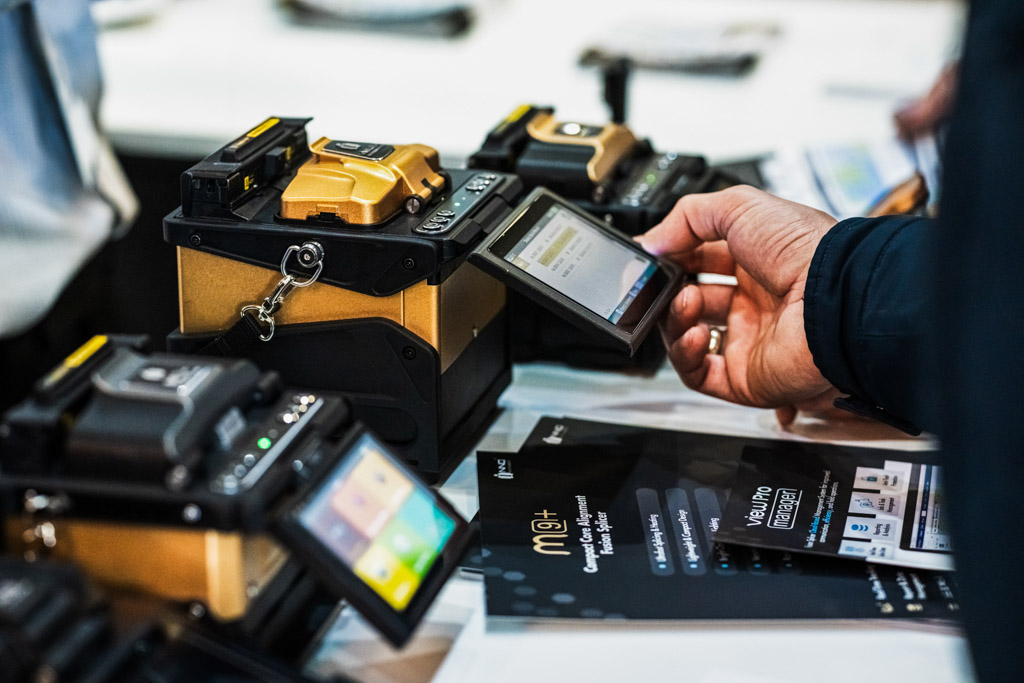
When you choose a fusion splicer, the first real decision is the alignment method, core alignment vs cladding alignment. Both types of splicer both make permanent, low-loss joints, but they do it in different ways and suit different kinds of work. Picking the right one saves money on the purchase and time on every job after that.
What fusion splicing does
Fusion splicing joins two optical fibres end to end using an electric arc, so that light passes from one to the other with as little loss as possible. How precisely the two fibres are lined up before the arc fires is what separates the two types of splicer.
Core alignment
A core alignment splicer uses cameras, lenses and image processing to find the core of each fibre, the small central channel that carries the light. Motors then move the fibres in several directions until the cores line up with micron-level precision.
- Lowest loss. Aligning the cores directly compensates for small core offset in the fibre itself, so loss stays low and consistent.
- High repeatability. Results are predictable splice after splice, which matters when you are working to strict loss budgets.
- Versatile. Suitable for single-mode and multimode fibre, and for long-haul, backbone and data centre links.
Active cladding alignment
A cladding alignment splicer lines up the outer glass, or cladding, of the two fibres. Because modern fibre is made with very small core offset, aligning the cladding usually aligns the cores as well. Active cladding alignment splicers use motorised V-grooves to adjust the fibre position and correct small differences, which makes them far more accurate than older fixed V-groove designs.
- Fast. Fewer alignment steps mean shorter splice cycles.
- Compact and light. Often smaller, with lower power draw, which suits drop work and climbing.
- Lower cost. A sensible choice where the loss budget is less demanding.
Side by side
| Core alignment | Active cladding alignment | |
|---|---|---|
| Alignment method | Cameras align the fibre cores | Motorised V-grooves align the cladding |
| Typical loss | Lowest and most consistent | Low, slightly more variable |
| Speed | Fast | Very fast |
| Size and weight | Larger, more robust | Compact and light |
| Cost | Higher | Lower |
| Best for | Backbone, feeder, high-count cable, data centres, repair of critical links | FTTP drops, access networks, maintenance |
Which one suits UK fibre work?
Most UK fibre teams fall into one of three groups.
Backbone, feeder and high-count cable
If you splice spine and feeder cables for full-fibre builds, or work to strict loss limits set by a network operator, choose core alignment. The lower, more consistent loss protects the link budget over long routes with many splices.
FTTP drops and access work
For connecting homes and businesses, a good active cladding alignment splicer is usually enough. It is lighter to carry, quick to set up and more affordable, which matters when you are equipping a large team.
Mixed work and maintenance
Contractors who move between build, repair and fault work usually get the best value from a core alignment splicer, because it handles every job. Some teams run core alignment splicers for jointers on feeder work and cladding alignment units for drop crews.
Other things to consider
- Battery capacity. Check how many splice and heat cycles you get per charge. Our guide to fusion splicer battery life explains the differences.
- Splice modes. Make sure the splicer covers the fibre types you use. See choosing the right splice mode.
- Local support. A splicer is only useful when it works. Check where it will be serviced and how long repairs take.
Buy, hire and support in the UK
Uptero is the authorised INNO distributor and service centre for the UK and Ireland. We supply both core alignment and cladding alignment fusion splicers from UK stock, with dispatch the same or next working day and a 3-year warranty on new equipment.
If you only need a splicer for a single project, or cover while your own is away, our fusion splicer hire service is a practical alternative to buying. Every splicer we sell is backed by our UK service and repair centre, with a 3-working-day turnaround.
Not sure which model fits your work? Talk to our team and we will recommend a splicer based on the fibre, cable counts and loss limits you work with.
A core alignment splicer uses cameras and image processing to line up the light-carrying cores of the two fibres. A cladding alignment splicer lines up the outer cladding, on the basis that the cores will then be aligned too. Core alignment gives the lowest and most consistent loss, while cladding alignment is typically lighter, quicker and lower in cost.
For most drop and access work, a modern active cladding alignment splicer produces loss well within typical FTTP budgets. Core alignment is the safer choice for backbone, feeder and high-count cable work, or where your client sets tight loss limits.
Yes. Uptero offers fusion splicer hire in the UK and Ireland, which suits short projects or cover while your own splicer is being serviced.
New INNO fusion splicers supplied by Uptero come with a 3-year warranty and are supported by our UK service centre.